

Chromite sand–High Temperature Guardian
1.Reasons that chromite sand can withstand high temperature
The core component of chromite sand is chromium oxide (Cr₂O₃), a substance that acts like a “fireproof coat” for the material, boasting a melting point as high as 2266℃! With the added “assistance” of elements such as iron and magnesium, chromite sand maintains structural stability even at temperatures exceeding 1600℃, making it a top performer among refractory materials.
Even more interestingly, chromite sand has a very dense crystal structure; at high temperatures, the atoms remain tightly bound together, making it inherently suited for high-temperature resistance. Like wearing a reflective raincoat, it provides both insulation and prevents deformation, earning it the title of “high-temperature guardian” in industry.
2.Practical applications of industrial refractory materials
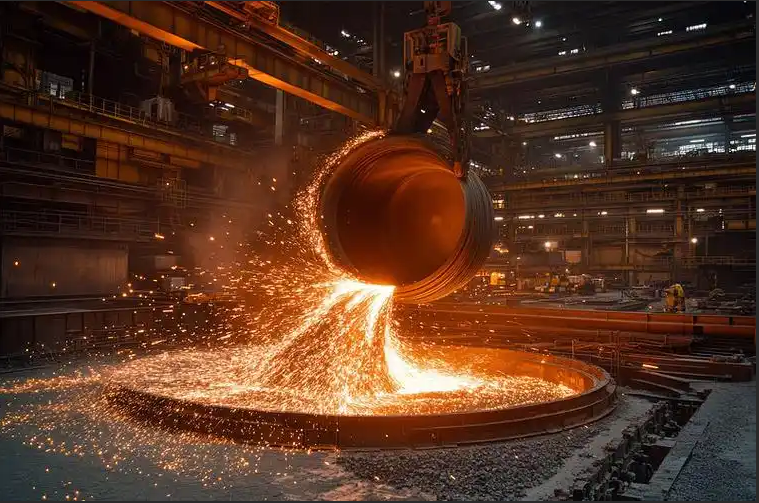
From the “lining” of steelmaking furnaces to the “floor” of glass melting furnaces, chromite sand/flour ‘s refractoriness shines in multiple fields. In steelmaking, furnace temperatures can reach 1700℃, melting ordinary materials long ago, but chromite sand can operate continuously for months without damage, directly saving steel mills 30% on maintenance costs. Even more impressively, it can be used as a coating for casting molds—forming a dense oxide layer at high temperatures, like an “invisible armor” for the mold, making the casting surface smoother and reducing scrap rates by 20%.

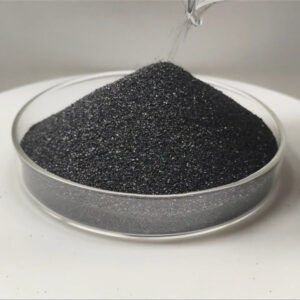
CHROMITE SAND
In glass manufacturing, chromite flour’s “corrosion resistance” is equally outstanding. Ordinary refractory materials crack after three months of contact with molten glass, while chromite flour can last for more than a year, effectively doubling the lifespan of glass furnaces.

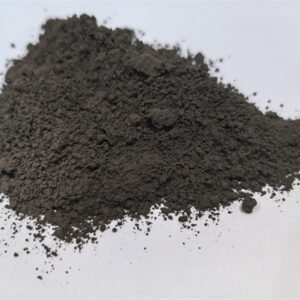
CHROMITE FLOUR
3.The “invisible killer” for refractory of chromite sand and optimization secrets
Don’t assume that chromite sand has unshakeable refractoriness! In practical applications, impurity content is a critical factor—even 1% silica can cause the refractoriness to plummet from 1600℃ to 1400℃. Therefore, purification and silica removal technology is crucial. Modern processes, using methods like magnetic separation, can reduce impurity content to below 0.5%, maintaining high refractoriness.
Furthermore, the “matching” of the application scenario is also important. For example, in steelmaking furnaces, chromite sand is suitable as a “working layer” (directly in contact with high temperatures) but not as an “insulating layer” (requiring materials with better thermal insulation). This proper combination is essential for optimal refractory performance.