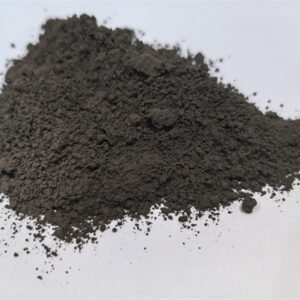


Chromite sand:“all–rounder” in industry
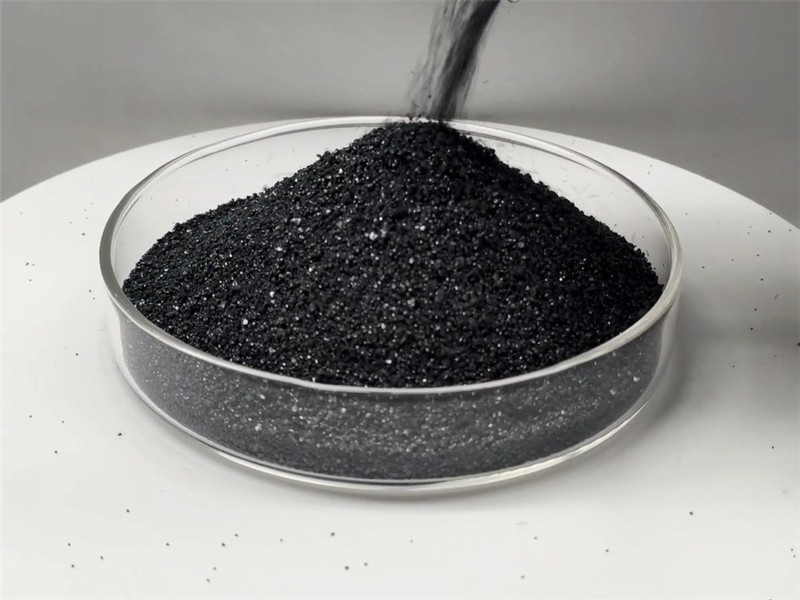
First,Quality guardian of foundry industry
In foundries, chromite sand is a secret weapon for improving casting quality. When molten metal is poured into the sand mold, its high melting point (around 2000℃) acts like a “fireproof coat,” protecting the casting from direct contact between the high-temperature metal and the sand mold, preventing sand adhesion. Even more remarkably, its coefficient of thermal expansion is close to that of the metal, allowing it to contract synchronously during cooling, preventing cracks or deformation on the casting surface. For example, in the production of automobile engine blocks, sand molds containing chromite sand can reduce surface roughness by 30% and the scrap rate by 15%, essentially giving each part a “beauty filter.”
Secondly,“Stabilizers” for refractory materials
In steel mills, chromite ore acts as a shield against temperatures exceeding 1500°C on the inner walls of blast furnaces. When mixed with materials such as alumina and magnesia, it forms a dense refractory layer, essentially giving the blast furnace a “bulletproof vest.” This material is not only heat-resistant but also possesses excellent corrosion resistance—when molten iron washes over it, the chromium oxide in the chromite ore reacts with the carbon in the iron to form chromium carbide, creating a protective film on the material’s surface and extending the refractory material’s service life by 2-3 times. Similarly, in glass melting furnaces, it stabilizes the furnace wall temperature, reduces bubbles caused by temperature fluctuations in the molten glass, and makes the glass products more transparent.
Thirdly,“Catalyst carriers” in the chemical industry
In chemical engineering labs, chromite sand acts as an “invisible assistant” in catalytic reactions. Its porous structure, like a sponge, adsorbs and immobilizes catalyst particles, ensuring ample contact between reactants and catalysts. For example, in the ammonia synthesis reaction, loading iron-based catalysts onto chromite sand can increase reaction efficiency by 20% while reducing catalyst loss. Even more interestingly, its chemical stability allows for repeated use—experiments show that after five cycles, the catalytic activity of the chromite sand support remains above 90% of its initial value, effectively providing a “perpetual motion machine” for chemical reactions.