

What are the advantages of South African chromite sand?
Key advantages of South African chromite sand compared to other global regions (includes foundry chromite sand and metallurgical chromite sand, benchmarked against Zimbabwe, India, Kazakhstan, and Türkiye).
I. Inherent advantages of chemical components
1. High Cr2O3, extremely low harmful impurity SiO2
South African foundry grade chromite sand : Cr₂O₃ ≥ 46%, SiO₂ ≤ 1.0%
Indian chromite sand: SiO₂ is generally 4%~6%, Al₂O₃ is relatively high, it easily forms low-melting-point silicates at high temperatures, and has serious sand adhesion.
Turkish chromite sand: SiO₂ 2%~4%, with large fluctuations in impurities, resulting in numerous surface defects in castings.
Kazakhstan metallurgical chromite sand: The silicon and calcium impurities are unstable, making them unsuitable for high-end precision casting.
Zimbabwe chromite sand: Higher Cr₂O₃ (48%~52%) and higher chromium-to-ferrochrome ratio, but lower MgO content, suitable only for smelting low-carbon ferrochrome, and its casting performance is far inferior to that of South Africa.
1% min SiO2 takes 2 values
① Refractoriness ≥1900℃, sintering temperature over 1800℃, suitable for stainless steel, high manganese steel, and large thick-walled cast steel
② High temperatures do not generate acidic low-melting-point slag and do not react with molten steel, thus reducing chemical sand adhesion at the source.
2. High MgO, balanced cr/Fe rate
MgO≈15%~16%, Cr/Fe=1.55~1.6:1
1. High magnesium oxide: It is weakly alkaline, which perfectly resists the corrosion of alkaline slag in high manganese steel and stainless steel; Indian ore has only about 10% MgO, poor slag resistance, and cast manganese steel is very prone to peeling and scaling.
2. Moderate Cr/Fe ratio: Unlike Zimbabwe’s Cr/Fe≈2.0 (which focuses on smelting low-carbon ferrochrome), South Africa balances casting refractory stability with the economics of high-carbon ferrochrome smelting, making it suitable for both steel mills and foundries. Extremely low harmful impurities: CaO≤0.3%, P/S trace amounts, no additional impurity removal required in smelting/casting, simple batching, and stable finished product composition.
II. Physical Performance Advantages
1. Low coefficient of thermal expansion, high dimensional accuracy of castings. The thermal expansion coefficient is much lower than that of chrome sand from India and Turkey. The volume remains almost unchanged at high temperatures, and the scrap rate is reduced by more than 30% compared with other production areas.
2. Excellent thermal conductivity, can replace chills. The thermal conductivity is 3 to 5 times that of silica sand and 30% to 50% higher than that of chromium sand from other sources; it accelerates the directional solidification of castings, refines grains, reduces shrinkage cavities and porosity, and eliminates the need for additional chills for thick-walled parts, thus reducing molding costs.
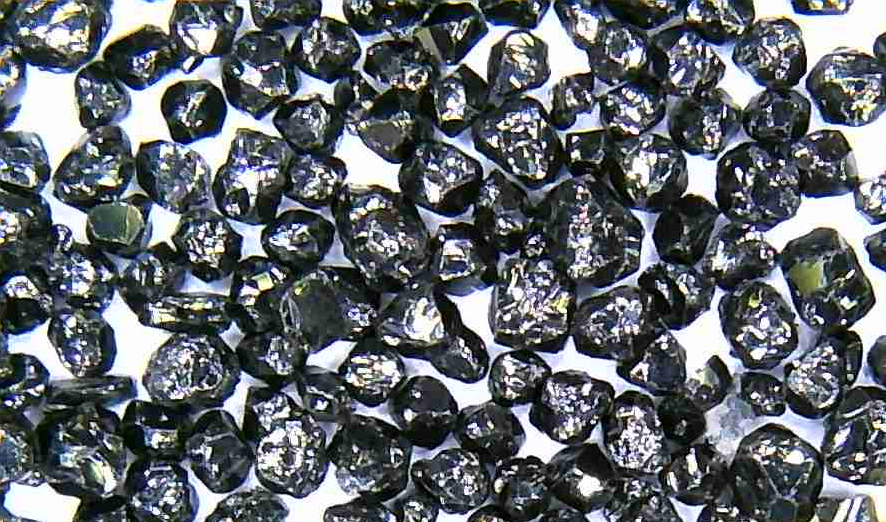
3. Regular particle shape, controllable grading, and high reusability: South African chromite sand particles are rounded with few sharp corners, have high bulk density and moderate air permeability; Mohs hardness is 5.5~6.5, with low crushing loss and a recycling rate far exceeding that of Indian chromite sand; standardized particle size grading makes it suitable for resin sand, water glass, lost foam, and shell molding processes.
4. High-temperature solid phase self-sealing to prevent metal penetration: During casting, the surface layer undergoes slight solid phase sintering, which automatically seals the gaps between sand particles, preventing molten steel from penetrating. This results in a smooth casting surface and can partially replace expensive zircon sand, significantly reducing the cost of casting consumables.
V. Additional advantages in smelting (metallurgical chromite sand)
South African ore has a moderate ferrochrome ratio and low silicon content, resulting in lower power consumption and higher chromium recovery rate in the smelting of high-carbon ferrochrome. It also has fewer impurities, leading to high compliance rates for phosphorus, sulfur, and silicon in the finished ferrochrome product, making it suitable for the production of mainstream 304/316 stainless steel. Compared to Zimbabwean ore with a high ferrochrome ratio, smelting high-carbon ferrochrome does not require additional iron ore, resulting in lower raw material costs.
Summary: Key Differentiating Advantages of South African Chromite sand
1. Chemically optimal: low silicon, high magnesium, balanced Cr/Fe ratio, taking into account the triple requirements of refractory, slag resistance, and smelting;
2. Best casting performance: low thermal expansion, high thermal conductivity, anti-sand adhesion, reusable, and suitable for all types of cast steel parts;
3. Highest quality stability: Large-scale homogenized ore beneficiation results in minimal fluctuations in batch indicators;
4. Strongest supply: The world’s largest reserves and production, with no restrictions on exports, ensuring long-term stable supply in large quantities;
5. Most versatile: It is compatible with all scenarios including casting, refractory materials, and high-carbon ferrochrome smelting, while other production areas can only use it in a single specific segment.