

The Marvelous Crystals of Chromite Sand
I. A Natural Masterpiece of the Octahedron
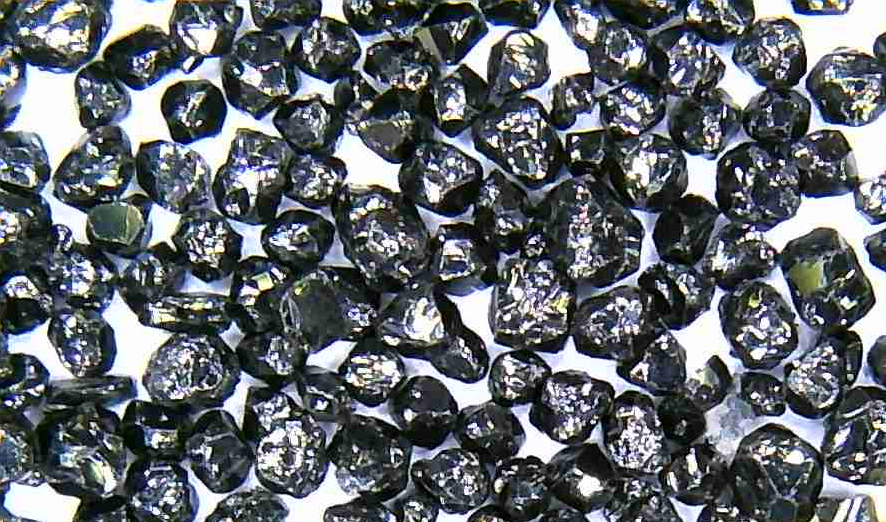
The most captivating feature of chromite sand is its iconic octahedral crystal structure. These naturally formed geometries resemble meticulously cut black diamonds, with each crystal face
presenting a perfect equilateral triangle. The main component, chromite (FeCr2O4), forms this highly symmetrical structure through the tight packing of metal ions and oxygen atoms.
Under a microscope, the crystal surface also exhibits a distinctive metallic luster and striations.
II. Structure Determines Properties
This unique crystal structure endows chromite sand with three main properties:
High-Temperature Stability: The octahedral framework remains intact even at 1700℃.
Mechanical Strength: The three-dimensional network structure gives it a Mohs hardness of 5.5-6.
Chemical Inertness: The dense arrangement effectively resists acid and alkali corrosion.
These properties make it an ideal molding sand material for the foundry industry.
III. Industrial Secrets Within Crystals
Engineers have cleverly utilized the crystalline properties of chromite sand:
Casting molds use its thermal stability to reduce porosity in metal parts
Refractory materials rely on crystal networks to delay high-temperature deformation
The abrasive industry leverages its hard edges for precision polishing
Even emerging 3D printing sand mold technology depends on its uniform crystal grain size distribution.